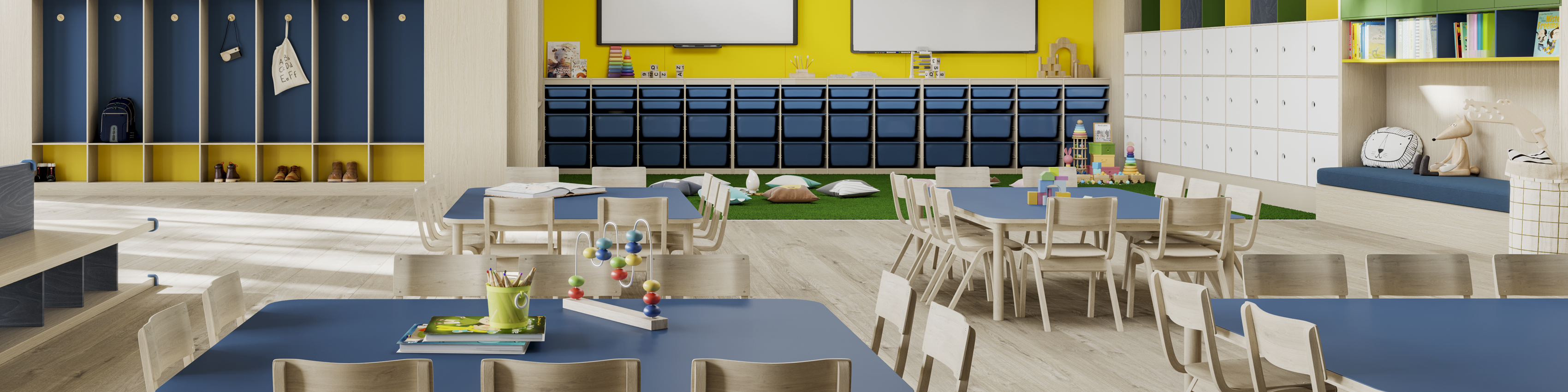
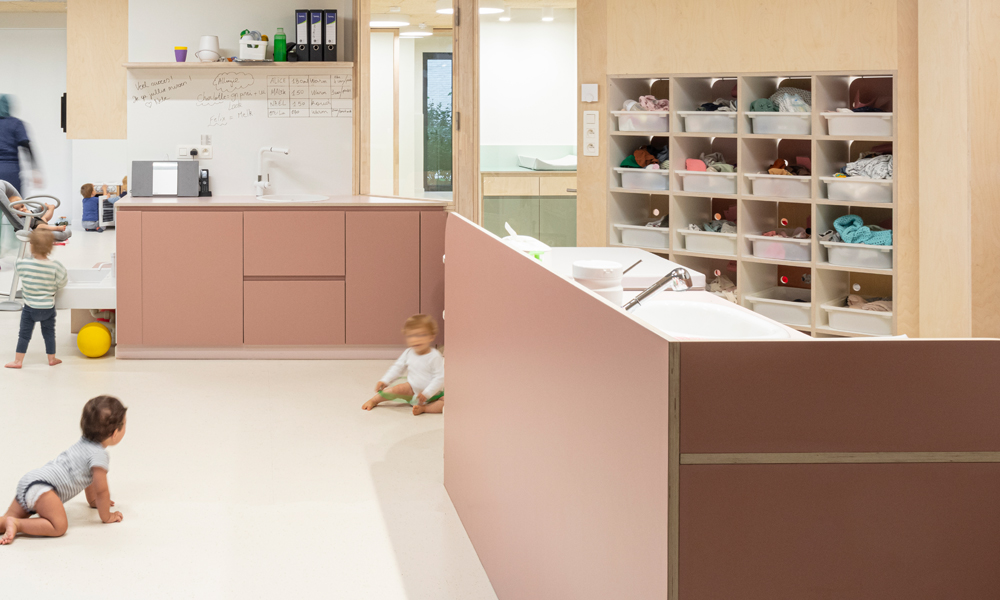
By considering colour, texture, lighting, and flexibility, designers can create learning environments that foster comfort, concentration, and curiosity.
Early Learning Spaces: Setting the FoundationIn early childhood education, the physical environment plays a crucial role in shaping a child’s personality, self-esteem, and capacity for learning. Drawing on the insights of educators like Dr. Maria Montessori, it’s clear that the right combination of tones, textures, and lighting can make a significant difference.
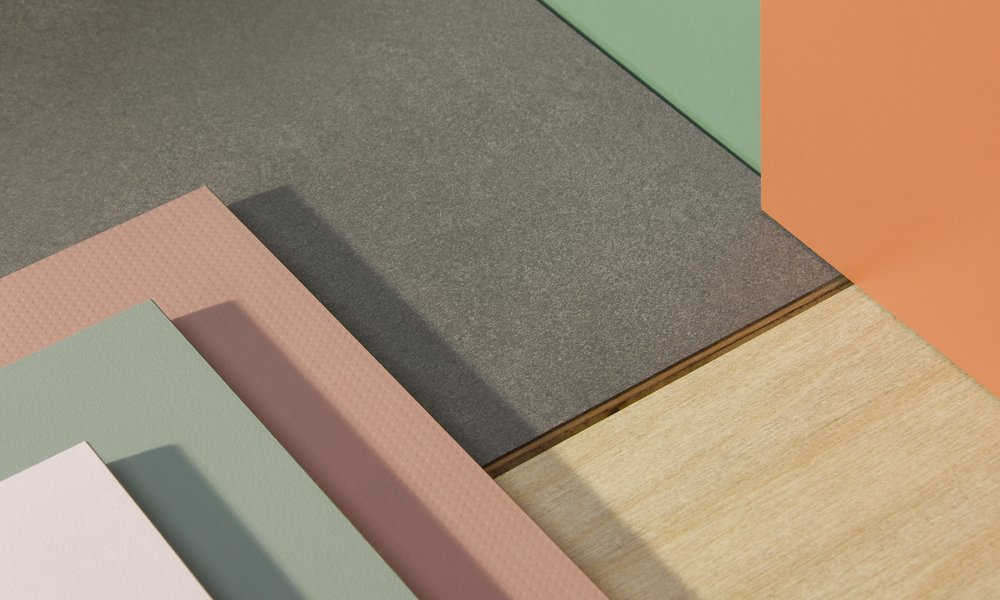
Colours and Light: Light, pastel tones create a calm and reassuring atmosphere, while softer hues help minimise visual overstimulation. Bright, warm colours can still be introduced thoughtfully, providing gentle stimulation without causing sensory overload. For instance, a palette that includes pale greens, muted pinks, or soft blues can enliven a space without overwhelming young learners.
Tactile Elements: At this age, children rely heavily on touch to explore their surroundings. Textures and temperatures provide valuable sensory information, enriching their developmental experiences. Incorporating accessible textures—through tactile surfaces, natural materials, —encourages children to interact with their environment, building motor skills and confidence.
By thoughtfully balancing soothing colours, varied textures, and inviting layouts, early learning settings can provide the security and comfort that children need to thrive during these formative years.