
Our Products
Low-Maintenance Surfaces Designed for Real Life
March 24, 2026
Easy-to-Clean Formica® Laminate Countertops Built for Busy Homes and Commercial Spaces

Category | Our Products
05/09/2024
There’s been some buzz in the manufacturing and design industry lately regarding the differences between high pressure laminate (HPL) and thermally fused melamine (TFM). From a performance standpoint, these two options aren’t equal, and it’s important to understand how to select the right laminate material for client projects.
What is high pressure laminate (HPL)?
High pressure laminate (HPL) is specifically engineered for both horizontal and vertical applications due to its durability and impact resistance. HPL is made from multiple layers — surface papers treated with melamine resin and core kraft papers treated with phenolic resin. These are fused together under high temperature and pressure to become a thermoset laminate sheet, which is then applied to a substrate like medium density fiberboard (MDF).

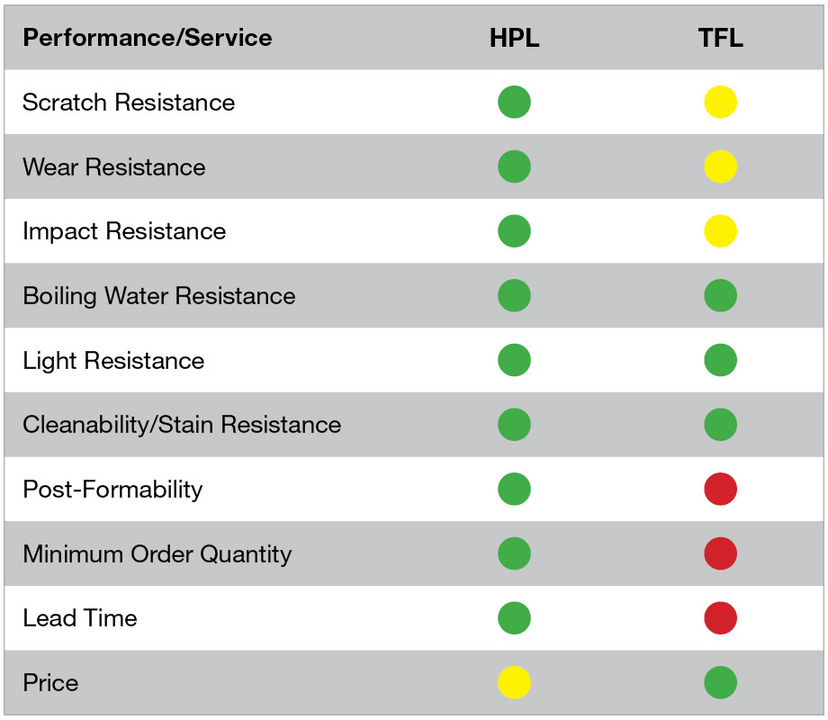
HPL’s multi-layer composition generates category-best scratch resistance, wear resistance and impact resistance. Additionnally, HPL is easy to clean and can be postformed to add flexibility in design. Formica® high pressure laminate sheets have low minimum order quantities and fast lead times to help designers keep projects on track.
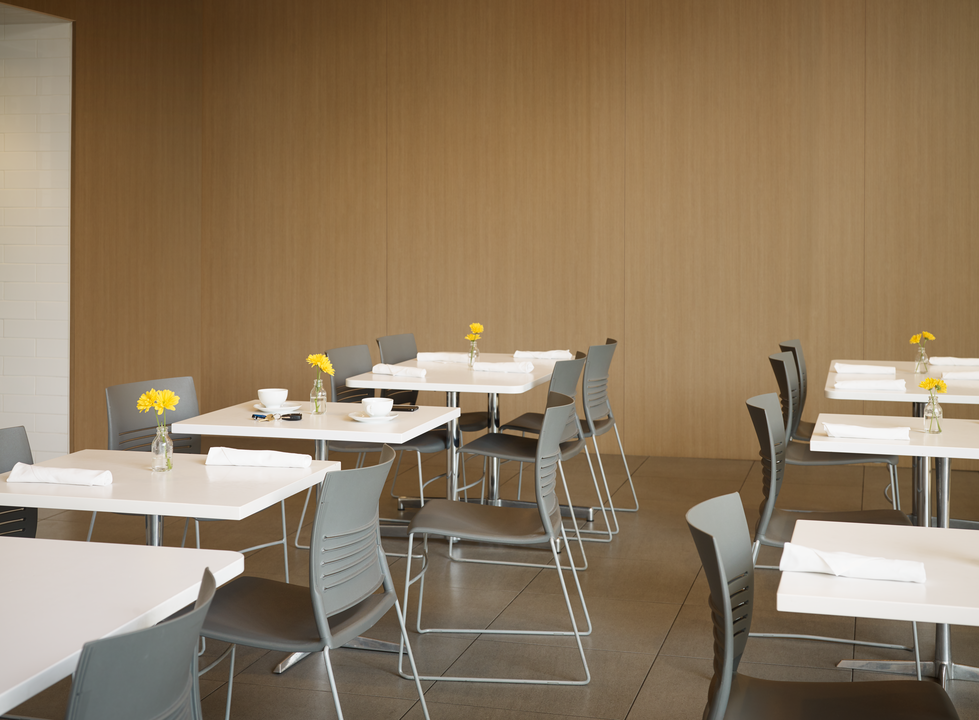
TFM is a value-engineered alternative to HPL in some vertical applications. This decorative paper is treated with melamine resins and pressed directly to a substrate. It’s often used for cabinets and office furniture. TFM has significantly lower scratch resistance, wear resistance and impact resistance compared to HPL.
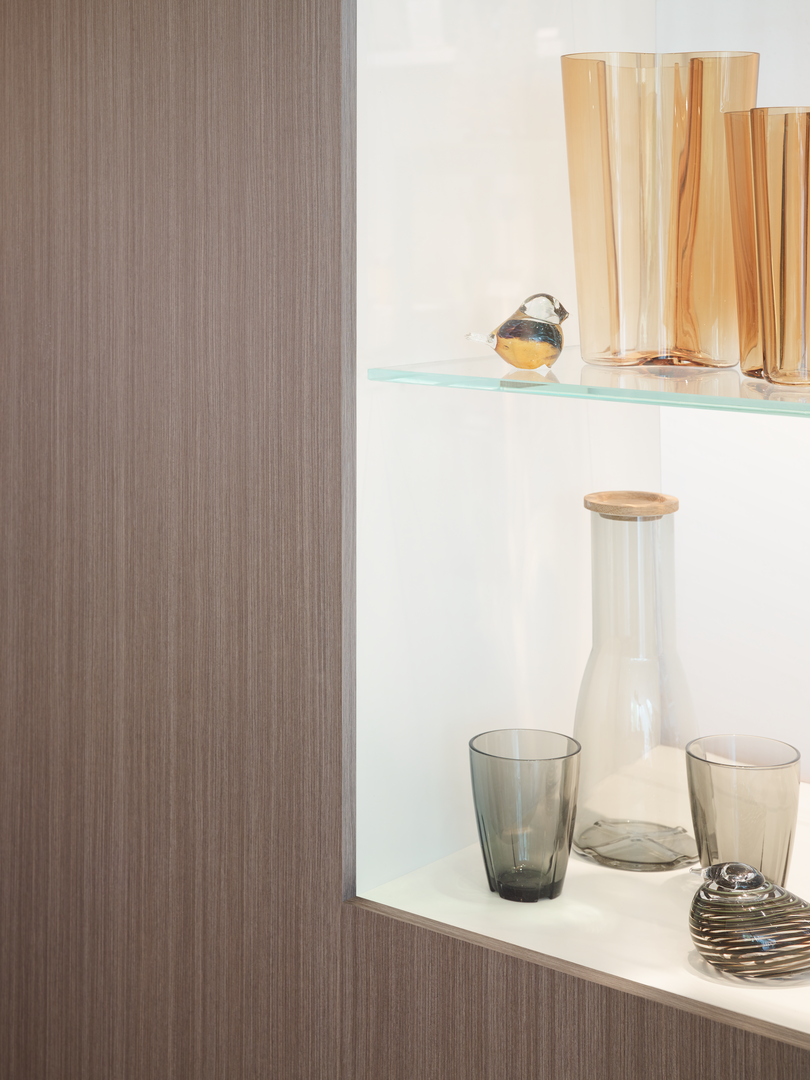
TFM is a true value play. It’s a good choice when durability isn’t a major concern, and budgets are tight.
When should HPL and TFM be used?
HPL should be used when a durable, high-performance surface is needed. It is also the only choice if postforming is required. HPL has a shorter lead time and much smaller minimum order quantities compared to TFM, making project timelines a factor in decision-making. TFM replace wood veneers and other surface materials in low-traffic areas where scratch resistance and impact resistance aren’t key factors.
Our Products
March 24, 2026
Easy-to-Clean Formica® Laminate Countertops Built for Busy Homes and Commercial Spaces
Our Products
February 26, 2026
Durable, hygienic and design-flexible surfaces that support patient safety, infection control and long-term performance in healthcare environments.
Our Products
February 13, 2026
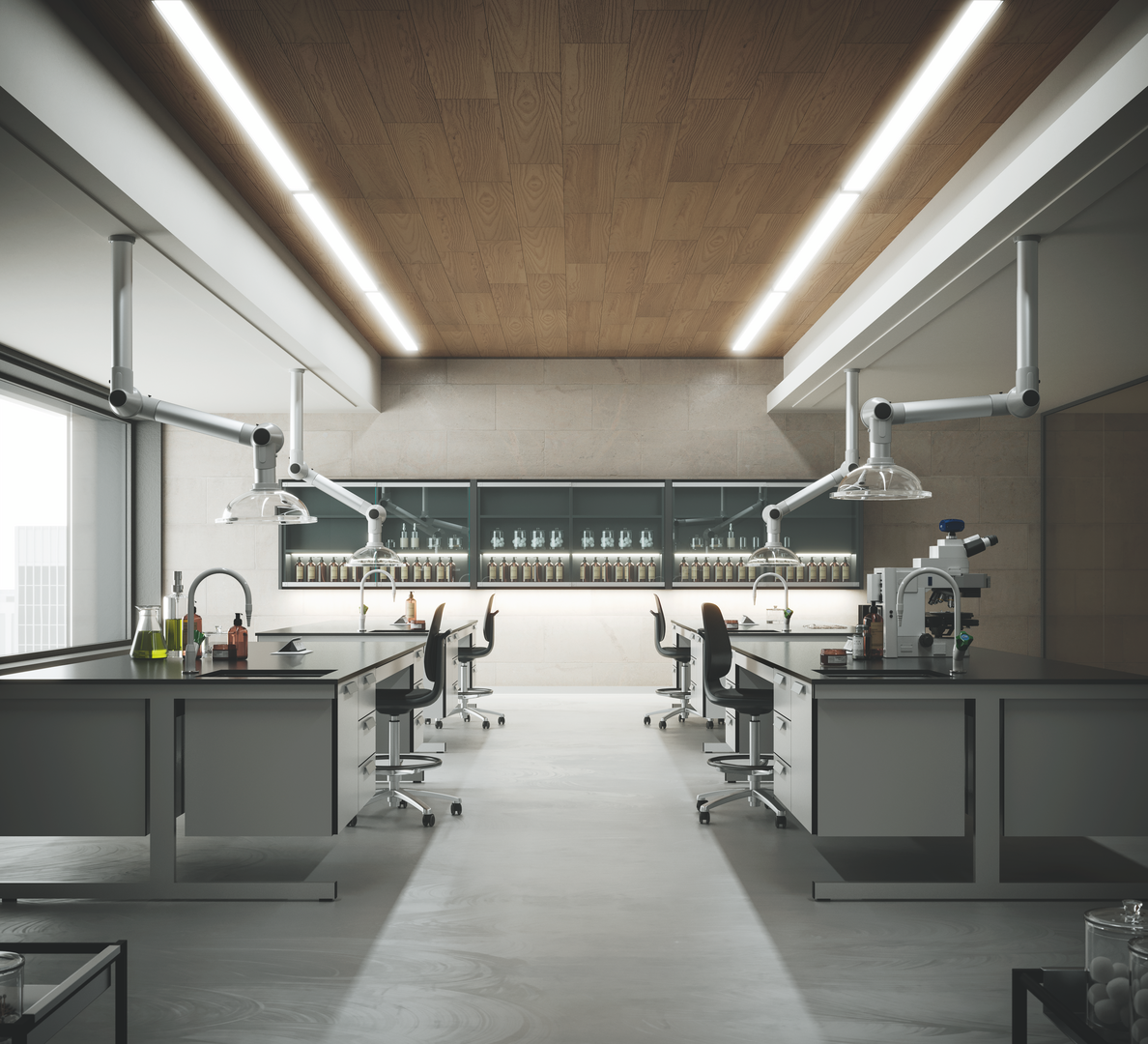
Explore why Phenolic Resin surfaces, like Trespa® TopLab®, are the preferred choice for performance-driven environments.


Belgium
(Nederlands)
Belgium
(Français)
Canada
(English)
Canada
(Français)
China
(简体中文)
Denmark
(Dansk)
Finland
(English)
Finland
(Suomi)
France
(Français)
German
(Deutsch)
Hong Kong
(English)
Indonesia
(English)
Ireland
(English)
Italy
(Italiano)
Japan
(日本語)
Malaysia
(English)
México
(Español)
Middle East
(العربية)
Netherlands
(Netherlands)
Norway
(Norsk bokmål)
Philippines
(English)
Poland
(Polski)
Singapore
(English)
Spain
(Español)
Sweden
(Svenska)
Taiwan
(繁體中文)
Thailand
(English)
Thailand
(ไทย)
United Kingdom
(English)
United States
(English)
Vietnam
(Tiếng Việt)